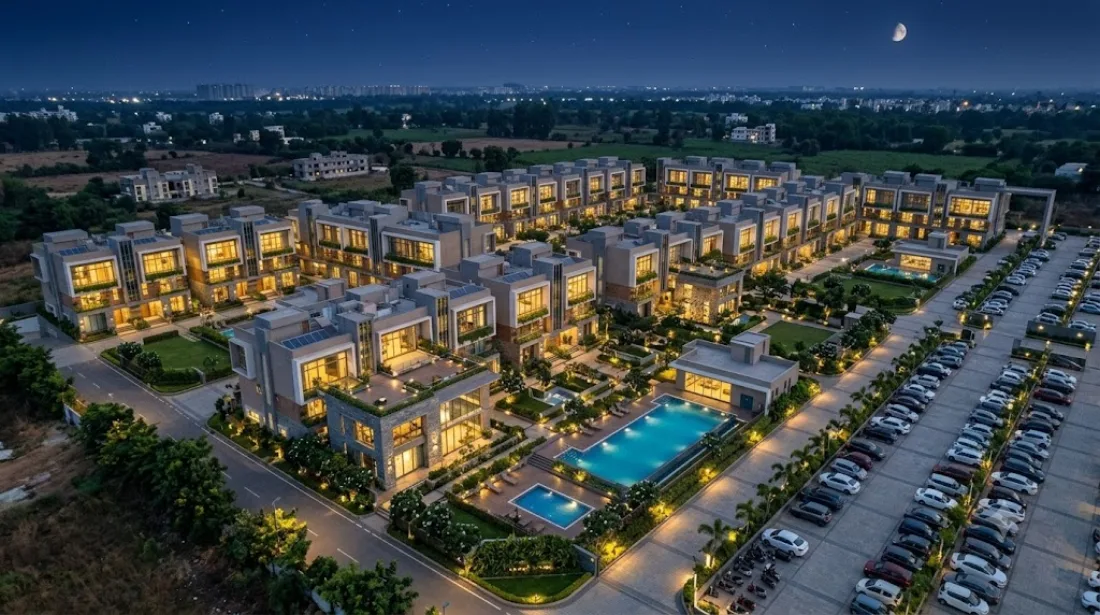
"Villament" has become one of the more common buzzwords in Bangalore's premium real estate listings over the last few years, sitting somewhere between "apartment" and "villa" in both name and marketing pitch. If you're comparing a project like Assetz Mizu and Ki on Hennur Road against a conventional high-rise apartment or a standalone villa, it helps to understand exactly what you're paying for, and what you're giving up, with each format. This guide breaks down the three formats plainly, without the marketing gloss.
1. What Is a Villament, Exactly?
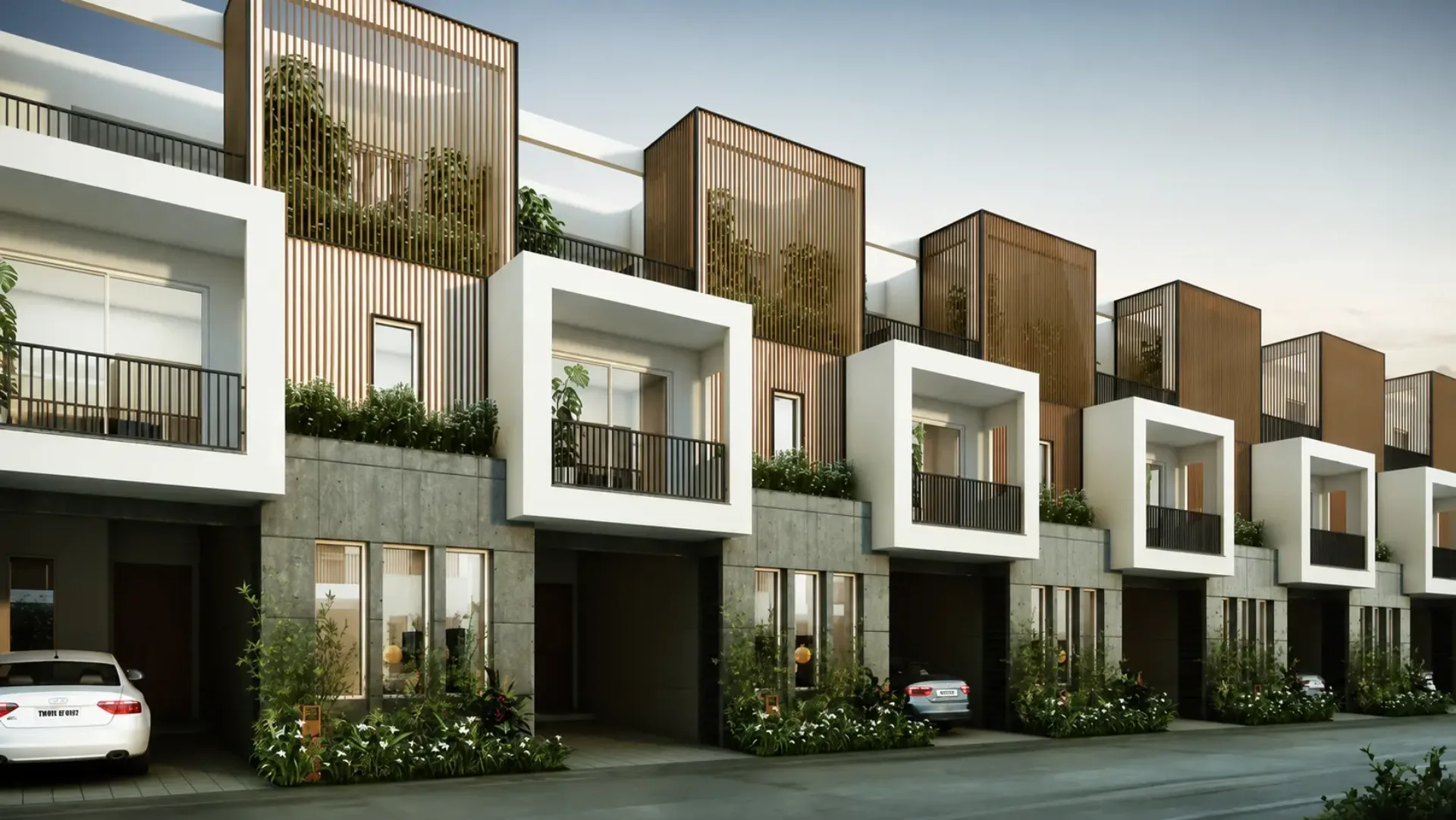
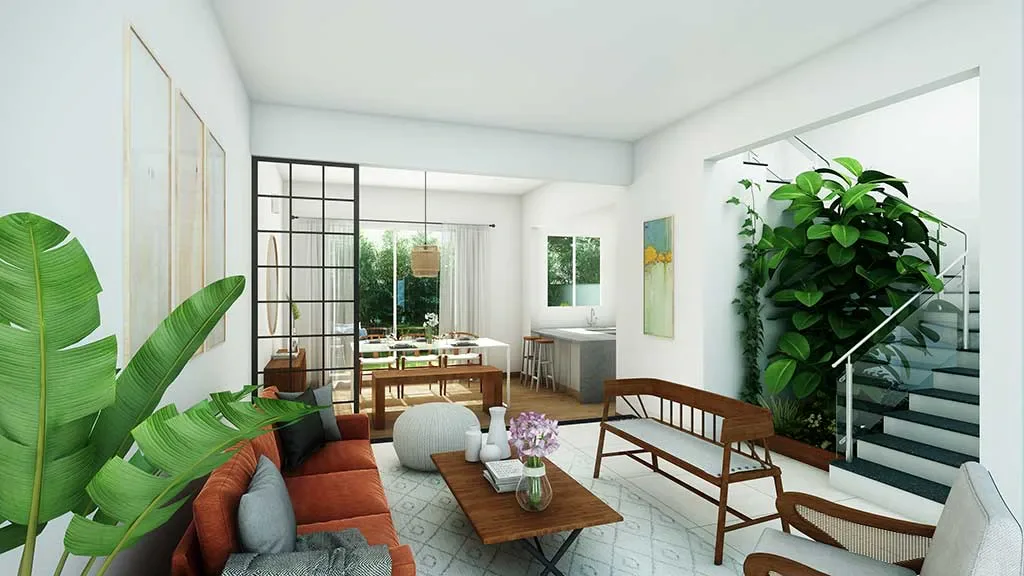
A villament is a low-rise residential format, typically built as basement or ground plus two to five floors, where each floor (or each home) is designed with villa-like features: a private garden, backyard or terrace, dedicated parking, and often a separate entrance, while still sharing a compound wall, security, and common amenities with a small cluster of similar homes. The word itself is a portmanteau of "villa" and "apartment," and that's a fairly accurate description of the format's positioning: villa-style privacy and outdoor space, apartment-style community security and shared amenities.
Crucially, a villament is not a legal or regulatory category, it's a marketing and architectural term. Under RERA and municipal building codes, a villament project is typically registered and approved as a group housing or apartment development, just built at a much lower density (often under 30 units per acre) than a conventional high-rise. That lower density is what actually delivers the villa-like feel: fewer neighbours per acre, more open and green space per resident, and enough room for individual gardens, backyards or terraces that a 40-storey tower simply doesn't have room for.
2. Villament vs Apartment: The Core Differences
| Factor | Villament | Apartment (High-Rise) |
|---|---|---|
| Typical Density | 15-30 units/acre | 80-150+ units/acre |
| Structure | Low-rise, B+G+3 to B+G+5 | G+15 to G+40+ towers |
| Private Outdoor Space | Private garden, backyard or terrace with most units | Balcony only, shared terrace/garden at best |
| Parking | Often a dedicated private garage per unit | Allotted basement/stilt parking slot |
| Price per Sq Ft | Higher, reflects land-to-unit ratio | Lower, reflects higher unit density |
| Amenity Scale | Smaller clubhouse, fewer total residents to share it with | Larger clubhouse, more amenities, more residents sharing them |
| Community Size | Typically a few dozen to a few hundred homes | Often several hundred to 1,000+ homes |
The practical upshot: a villament almost always costs more per square foot than a comparable apartment in the same micro-market, because you're paying for a much lower land-to-unit ratio. A 4 BHK villament with a private backyard is fundamentally consuming more land per household than a 4 BHK unit on the 20th floor of a tower housing hundreds of families on the same plot size. If your priority is maximum amenities and the lowest entry price per square foot, a high-rise apartment usually wins. If your priority is privacy, outdoor space and a smaller, quieter community, the villament format is built specifically to deliver that, at a price premium.
3. Villament vs Villa: Where the Line Blurs
This comparison is genuinely closer, and it's where most buyers get confused. A standalone villa is typically an independent structure on its own plot, with no shared walls, no shared building structure, and full control over the land title in most gated villa communities (subject to the community's own covenants). A villament shares a building structure (even if it's low-rise) with a small number of other homes, meaning you own the unit and an undivided share of the common land, similar to an apartment's ownership structure, not full standalone plot ownership.
- Ownership: Villa buyers typically get clearer, more independent title to their specific plot; villament buyers get unit ownership plus an undivided share (UDS) of the project land, apartment-style.
- Independence: A villa has no shared walls or structure with a neighbour. A villament, even a spacious one, is still part of a shared building.
- Customization: Villa owners generally have more flexibility to modify or extend their structure (subject to local building codes). Villament owners are more constrained, similar to an apartment, since it's a shared building.
- Price: A standalone villa on an equivalent plot size in the same micro-market is typically priced higher than a villament, reflecting the fully independent land and structure.
- Maintenance: Villaments usually come with a managed maintenance/CAM structure similar to an apartment community. Villa communities may have lighter, HOA-style maintenance, or none at all outside common areas.
In short: a villament is best understood as "villa-adjacent," not "villa-equivalent." It captures most of the lifestyle benefits, private outdoor space, lower density, quieter surroundings, without the fully independent land ownership and structural freedom of a true standalone villa, and usually at a lower price point than a comparable villa.
4. Resale and Rental Considerations
Because "villament" is a relatively newer format in Bangalore compared to conventional apartments, the resale market for it is thinner, there are simply fewer comparable listings for an appraiser or a buyer's agent to benchmark against. This isn't necessarily a negative: a scarce, well-differentiated product can hold value well precisely because there isn't much competing supply, but it does mean resale timelines can be less predictable than for a mainstream apartment configuration in a large, well-established project.
On rentals, villaments tend to attract a specific tenant profile, typically senior executives, larger families or multi-generational households who specifically want private outdoor space and are willing to pay a premium for it, rather than the broader rental pool a standard 2-3 BHK apartment can draw from. That can mean higher per-unit rental income, but a longer search time to find the right tenant, since the addressable pool is smaller.
5. Which Format Actually Fits You?
A few practical questions can cut through most of the marketing noise:
- Do you want a private garden, backyard or terrace as a non-negotiable? A villament or villa. A conventional apartment balcony won't deliver this.
- Is a large clubhouse and dozens of shared amenities important to your household? A high-rise apartment, with hundreds of residents sharing costs, usually funds a bigger amenity package than a smaller villament community can.
- Do you want full independence with no shared building structure at all? A standalone villa, not a villament.
- Is price per square foot the primary constraint? A conventional apartment will almost always beat both villaments and villas on entry price per square foot in the same corridor.
- Do you want villa-like privacy but aren't ready to pay full villa pricing or take on independent-structure maintenance? This is exactly the buyer profile the villament format is built for.
6. A Live Example: Assetz Mizu and Ki
Assetz Mizu and Ki off Hennur Road is a useful, current illustration of the format. It's built as just 188 villaments across 8.2 acres, roughly 23 units per acre, with 55% of the land kept as open, Balinese-themed green space. Every 4 BHK home comes with a private backyard of up to 500 sq ft, a large private terrace, and a dedicated 2-car garage, exactly the kind of villa-style features a conventional high-rise apartment on the same corridor structurally cannot offer at scale. It's currently at pre-launch stage with RERA registration awaited, which is a separate diligence point worth reading about in our full project review before making any decision.
Comparing villament, apartment and villa options in North Bangalore?
Talk to Our Advisory Team →Our Honest Assessment
The villament format is a genuine middle ground, not just a marketing label stretched over an ordinary apartment. It structurally delivers lower density, private outdoor space and dedicated parking that a high-rise apartment cannot match at the same price point, while remaining more affordable and less maintenance-intensive than a fully independent villa. The trade-offs are real too: a price premium over conventional apartments, a smaller amenity base to spread costs across, and a thinner resale comparable set given how new the format still is in Bangalore. If privacy, outdoor space and a quieter, low-density community matter more to your household than maximizing amenities per rupee or minimizing entry price per square foot, a villament is worth serious consideration, provided you go in with clear eyes on ownership structure (UDS, not independent plot title) and, for any pre-launch project, extra diligence on RERA status before booking.