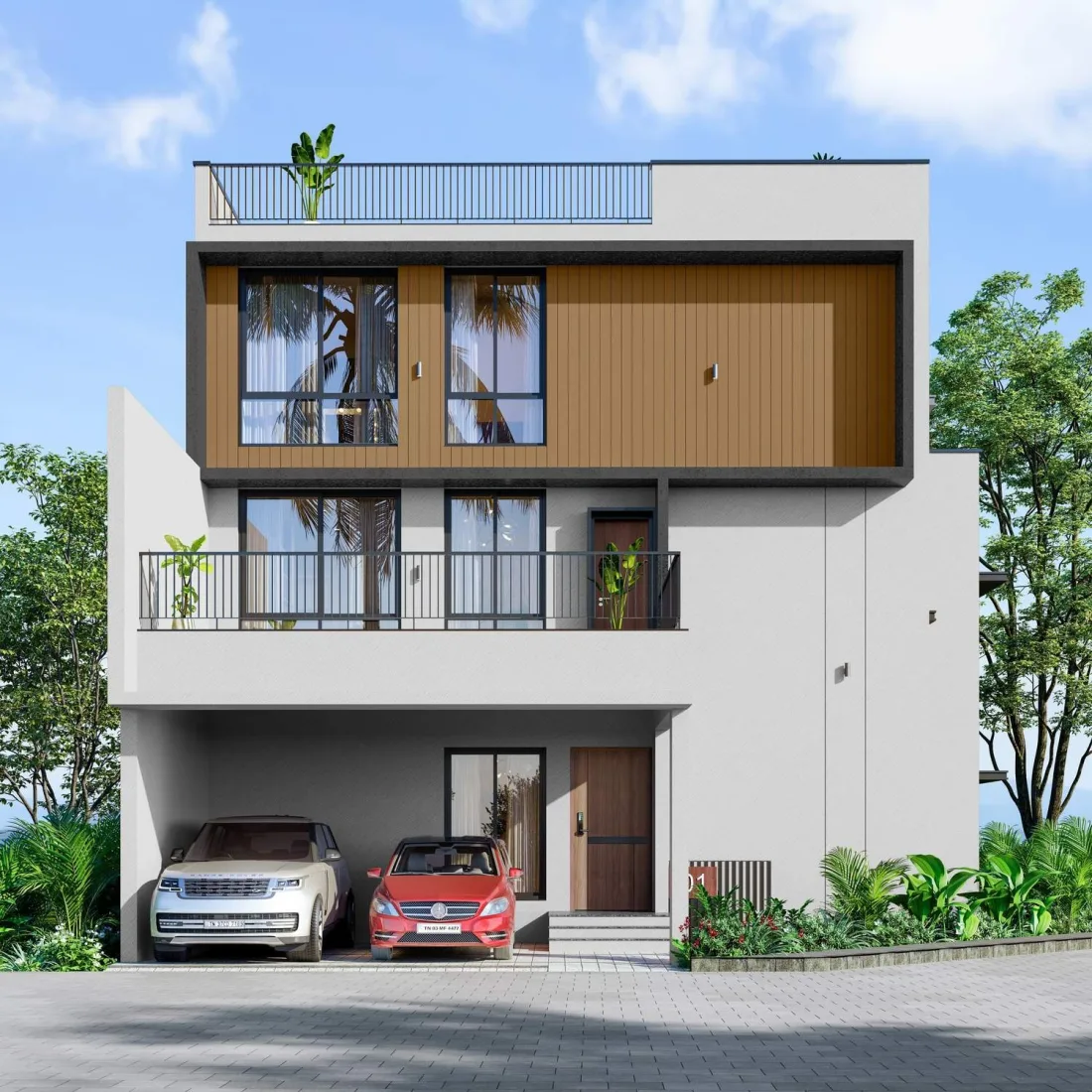
The Tamil Nadu Real Estate Regulatory Authority (TNRERA) has put a price on misleading property advertisements. Through a circular dated June 24, 2026 and effective from July 1, 2026, the authority introduced a graded penalty framework for non-compliant real estate ads, with fines ranging from Rs 50,000 to Rs 5 lakh depending on how serious the violation is and how large the project's value is. The penalties are levied under Sections 61 and 63 of the Real Estate (Regulation and Development) Act, 2016, and the framework has been drawing renewed coverage in recent weeks as more of Chennai's builders adjust their marketing to comply. For a market where brochures and hoardings routinely make bold claims, this is worth understanding in detail if you're actively evaluating listings.
1. What Counts as a Major Violation
TNRERA's circular categorises breaches into major and minor, with the heaviest penalties reserved for the most consequential misrepresentations. Major violations include advertising a project that isn't actually registered with TNRERA, publishing an ad without the project's RERA registration number and its Form-C QR code, and comparing a project's asking price against a vague "market price" or a named competitor's pricing. These are the kinds of claims that most directly mislead a buyer about what they're evaluating, which is why they attract fines toward the upper end of the Rs 50,000 to Rs 5 lakh range.
2. The Specific Marketing Language Now Barred
Two habits common in Chennai property marketing are explicitly targeted. The first is the catch-all disclaimer "terms and conditions apply," used in place of actually disclosing what those terms are; TNRERA's guidelines require ads to state relevant terms rather than wave at them. The second is unverifiable distance and travel-time language, phrases like "10 minutes from the airport" or "5 minutes from the IT corridor," which rarely account for actual traffic conditions or the specific route being described. Both practices are now treated as potentially misleading rather than harmless marketing flourish.
- Every compliant ad needs specific elements. A TNRERA registration number, a scannable Form-C QR code, the authority's official website, accurate project location and complete promoter contact details are now baseline requirements across print, digital, television, hoardings and social media.
- Vague time and distance claims are a red flag, not a selling point. If an ad leans heavily on "X minutes from Y" without a specific route or condition, treat it as marketing shorthand rather than a fact to plan your commute around.
- Price comparisons against "market rate" invite scrutiny. A project claiming to be cheaper than an undefined market average, without naming a comparable project, is exactly the kind of claim this circular was written to catch.
3. What This Means If You're Evaluating a Chennai Listing
The most useful habit this circular encourages is a simple one: look for the registration number and QR code on any ad you're taking seriously, and actually verify it on TNRERA's own portal (rera.tn.gov.in) rather than taking the ad's claims at face value. A legitimate, compliant project should have nothing to hide in its RERA filing, since the registration record will show the promoter's details, the sanctioned plan and the registered completion date, all of which you can cross-check against what the advertisement is telling you.
4. Why This Complements Other Recent TNRERA Moves
This advertising crackdown sits alongside other steps Tamil Nadu's regulator has taken this year to tighten builder accountability, including stricter scrutiny of project addresses and possession date commitments. Taken together, they point toward a regulator that is increasingly willing to act on the gap between what's advertised and what's actually registered, which is a good thing for any buyer doing their own due diligence in Chennai's market.
The Bottom Line
TNRERA's advertising penalty framework doesn't change how you evaluate a home, but it does make it more likely that non-compliant claims get corrected or penalised over time. In the meantime, treat a project's RERA registration number as your first stop for verification, not its brochure copy. Talk to our team if you'd like help verifying a Chennai project's RERA filing before you book.