If you've spent any time on property forums or social media this year, you've probably seen the claim that Bangalore real estate is finally cooling off, or worse, heading for a correction. The actual price data tells a different, more boring story: prices are still rising, just not at the frantic pace of the last few years. Here's what's really going on.
1. The Headline Numbers
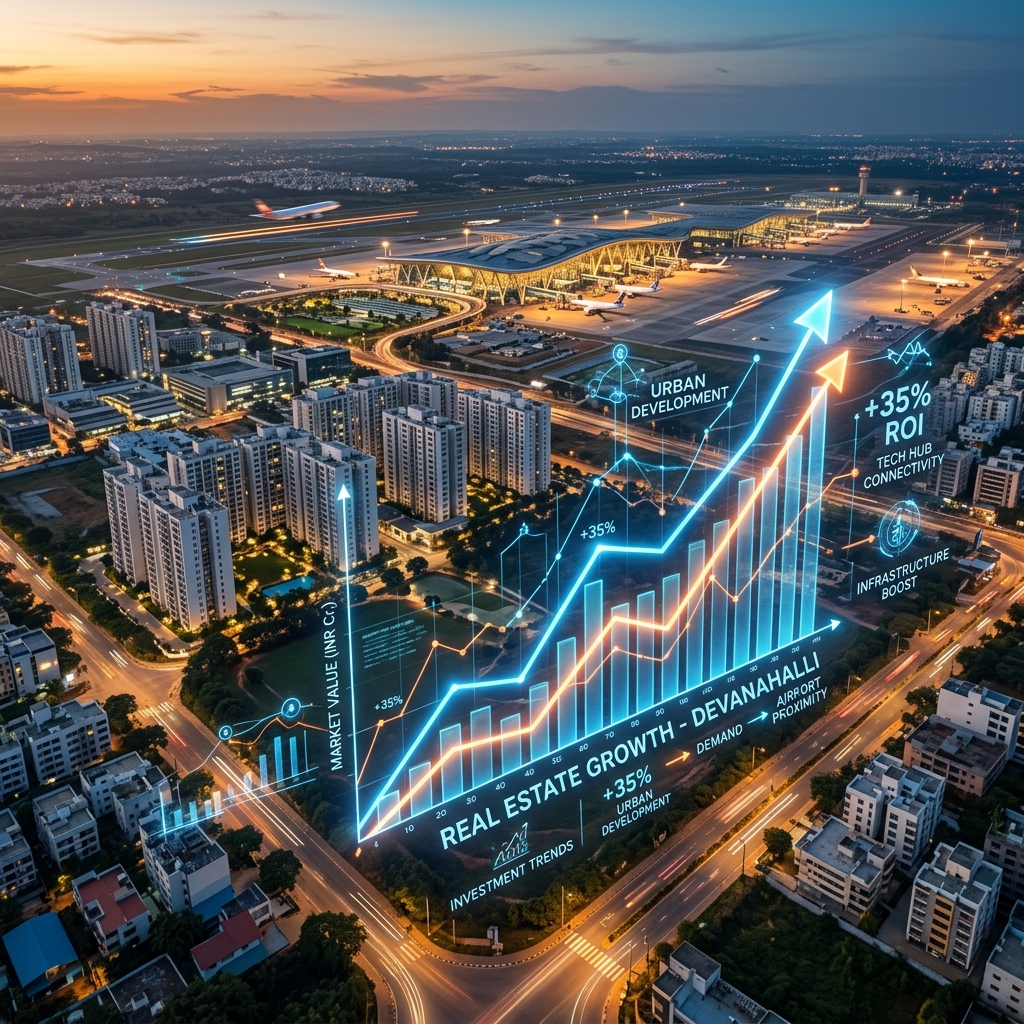
As of mid-2026, the average asking price in Bengaluru stands at around ₹12,100 per square foot, up from roughly ₹10,950 in September 2025. Analysts project a further 6 to 10% appreciation over the rest of the year. That's a slower rate of gain than the sharpest years of the post-pandemic boom, but it is unambiguously still appreciation, not a decline.
2. Where the "Cooling" Narrative Comes From
Office space absorption, a leading indicator of residential demand near tech corridors, is estimated at 15 to 16 million sq ft in 2026, down from 21 million sq ft in 2025. That's a real moderation, and it's likely the source of most of the cooling headlines. But a slowdown in the rate of office leasing growth is not the same as a market downturn, and rental yields near tech parks have held steady at 3 to 5% through the same period.
3. Consolidation, Not Correction
What's actually happening is better described as consolidation: developers pricing more disciplined, new supply being released more measured rather than flooding the market, and buyers who are more informed and less prone to panic decisions than in previous cycles. This is a healthier market structure, even if it makes for a less dramatic headline than a crash.
4. Which Corridors Are Still Genuinely Appreciating
Not every part of Bangalore is moving at the same pace. Prices continue to rise most visibly in:
- Whitefield, anchored by ITPL and established IT employment
- Sarjapur Road, driven by continued tech corridor expansion
- Hebbal, benefiting from existing metro and airport-road connectivity
- North Bangalore broadly, where metro expansion and job-hub growth continue to compound
These are corridors where price growth is backed by genuine connectivity and employment fundamentals rather than pure speculation, which is exactly the kind of appreciation that tends to hold up even in a more disciplined market.
5. What This Means Depending on Who You Are
If you're an end user
Don't time your purchase around quarter-to-quarter price movement. Focus on location fit, builder track record and RERA compliance, since these matter far more to your actual living experience and resale value than whether prices rise 6% or 10% this specific year.
If you're an investor
A consolidating market rewards investors who focus on genuine fundamentals, connectivity, job-hub proximity, and credible developers, over those chasing pure momentum. It's a market that punishes speculative bets more than it used to.
The Outlook
2026 is unlikely to be remembered as a year of decline for Bangalore real estate. It's more likely to be remembered as the year the market stopped rewarding hype and started rewarding quality corridors and disciplined pricing again, which, for a genuine long-term buyer, is a good thing.
On volumes, PropEquity data showed Bengaluru home sales up 47% year on year in Q2 2026, the fastest growth among India's top nine cities.
Knight Frank's numbers point the same way: Bengaluru logged 43,140 home sales from January to September 2026, up 5% year on year.