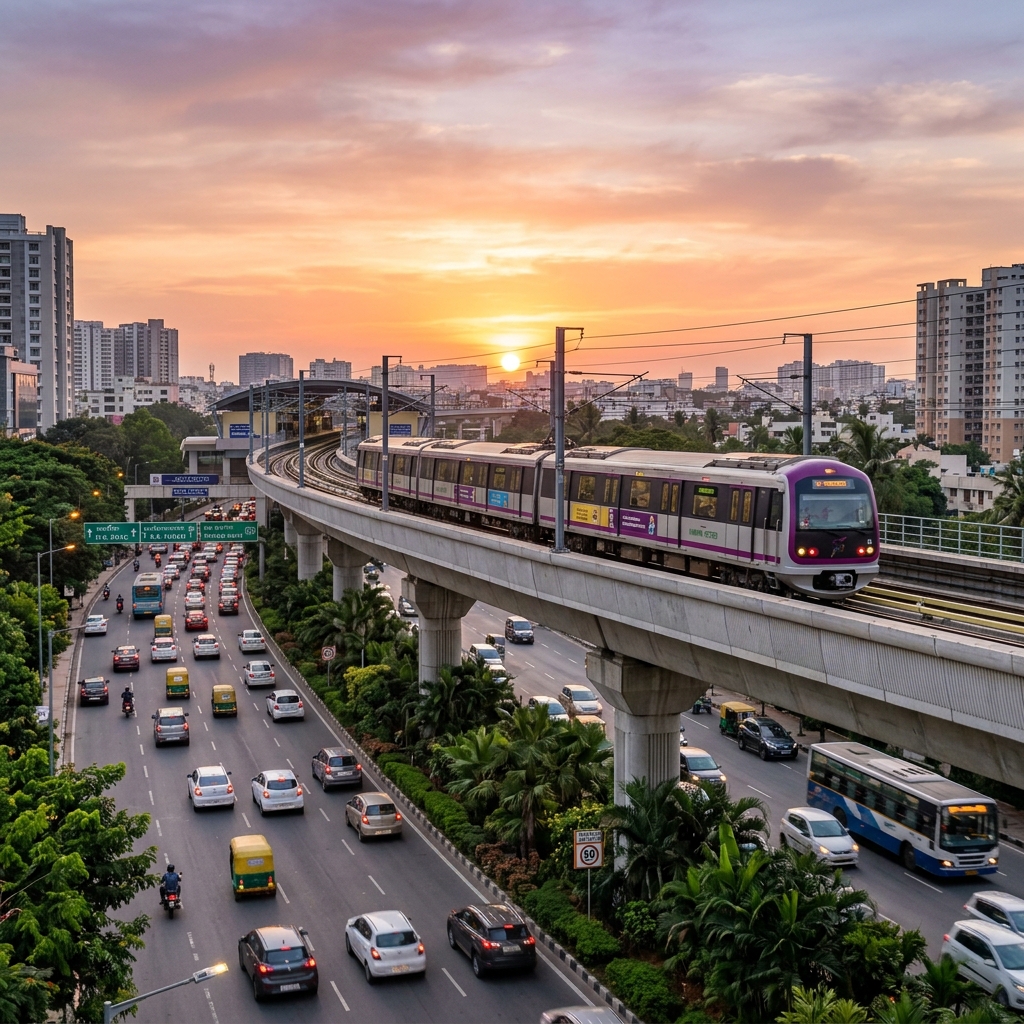
Bengaluru Metro Rail Corporation Limited began trial runs on the Blue Line's airport corridor in November 2026, moving trains along stretches of the 58.19 km route that will eventually connect the Outer Ring Road's tech corridor to Kempegowda International Airport. Officials have indicated commercial operations will roll out in phases between 2027 and March 2028, a more cautious framing than some of the 2026 target dates that circulated earlier in the project's long construction history. For North Bengaluru, where land values along Hebbal, Yelahanka and the Devanahalli stretch have been priced for years partly on the promise of this line, a trial run is a genuinely different stage from a construction update, even if full commercial service remains more than a year away.
1. What a Trial Run Actually Confirms
A trial run means that a stretch of track, signalling and at least one rolling stock set are functional enough to be tested under near-operational conditions, typically ahead of a formal safety certification process by the Commissioner of Metro Rail Safety. It is a later, more concrete stage than "under construction" or "civil work in progress," the language that has described various Blue Line segments for much of the past two years. It is not, however, the same as a confirmed opening date. Bengaluru's metro projects, this one included, have a track record of trial-stage milestones preceding actual public service by many months, so the sensible way to read this news is as confirmation that a meaningful segment of the line is now physically operable, not as a reason to expect trains carrying paying passengers imminently.
2. Why This Corridor Matters for North Bengaluru Property Values
The Blue Line's airport corridor is arguably the single most consequential planned metro route for North Bengaluru's residential micro-markets, because it is the first rail link that would connect the Outer Ring Road's IT employment belt directly through Hebbal to Kempegowda International Airport, touching Yelahanka and the broader Devanahalli growth corridor along the way. Projects positioned along or near this corridor, from high-rise apartment developments closer to the airport itself to villa-plot communities further along Devanahalli's growth belt, have been marketed for years partly on the strength of this exact connectivity story. A trial run doesn't change any individual project's price, RERA status or possession timeline, but it is a legitimate, dated milestone that supports the broader connectivity thesis these locations have been sold on, and it is the kind of update worth factoring into a multi-year investment horizon rather than a short-term buying decision.
- Trial runs typically precede commercial opening by many months, sometimes longer. Treat the 2027 to March 2028 phased target as the more realistic planning horizon than any single, earlier date you may have seen quoted.
- This is one stretch of a long line. A 58.19 km corridor with multiple stations opens in segments, not all at once, so a trial run on one section doesn't mean the entire airport link is close to operational.
- Connectivity-driven price appreciation tends to be gradual. Even once trains are running, the fuller effect on property values along a new corridor typically plays out over several years, not immediately at launch.
3. What It Means for Buyers Evaluating Projects Along the Corridor
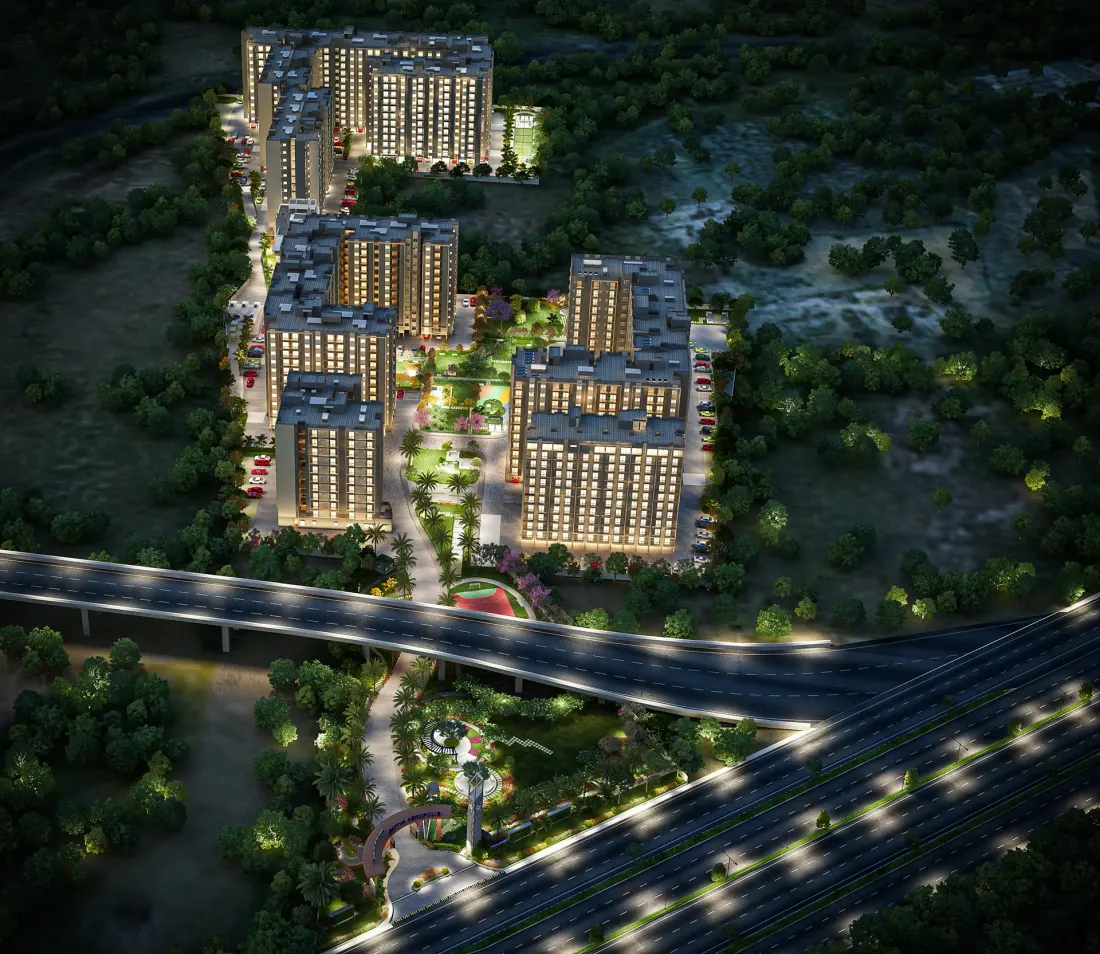
For buyers specifically looking at this stretch of North Bengaluru, this is a reasonable moment to revisit how a given project's marketing has framed the Blue Line, and to separate the project's own confirmed facts, price, RERA registration, configurations and possession date, from the broader infrastructure narrative around it. Several developments positioned along this general corridor illustrate the range of formats on offer: Sattva Aeropolis near Devanahalli offers studio to 3 BHK apartments close to the airport, Brigade KIADB Phase 2 is positioned as a large aerospace-park township in the same belt, and Assetz Palmscape offers premium villa plots further along Devanahalli's growth corridor, each a different way to participate in the same long-term connectivity story. Whichever format or price point you're evaluating, it's worth asking any developer or broker exactly which Blue Line stations are planned nearest a specific project, and treating any claimed distance or travel-time figure as provisional until BMRCL publishes final station locations and an official commissioning date for that segment.
4. The Caveats Worth Keeping in Mind
Bengaluru's metro build-out has a long history of slipping dates, and the Blue Line's airport corridor is no exception, having already moved through several earlier target windows before this November trial-run stage. Buyers should also be aware that trial running on one stretch doesn't necessarily mean adjacent or connecting stretches are at the same stage of readiness; BMRCL has typically commissioned long lines in multiple phases rather than opening an entire corridor at once. None of this is a reason to dismiss the corridor's long-term potential, North Bengaluru's growth story around the airport has been underway for years independent of the metro specifically, but it is a reason to weigh any single infrastructure announcement as one input among several, alongside a project's own fundamentals, builder track record and price relative to comparable options in the same belt.
The Bottom Line
Trial runs on the Blue Line's airport corridor are a real, dated step forward for a project North Bengaluru has waited years for, and a meaningfully more concrete milestone than the construction-stage updates that preceded it. A commercial opening still realistically sits somewhere in the 2027 to March 2028 window, phased rather than all at once, so treat this as confirmation the corridor is moving, not as a trigger to pay a premium today for connectivity that remains more than a year from carrying its first paying passenger. Talk to our team if you'd like a read on which North Bengaluru projects are best positioned relative to the Blue Line's planned stations.