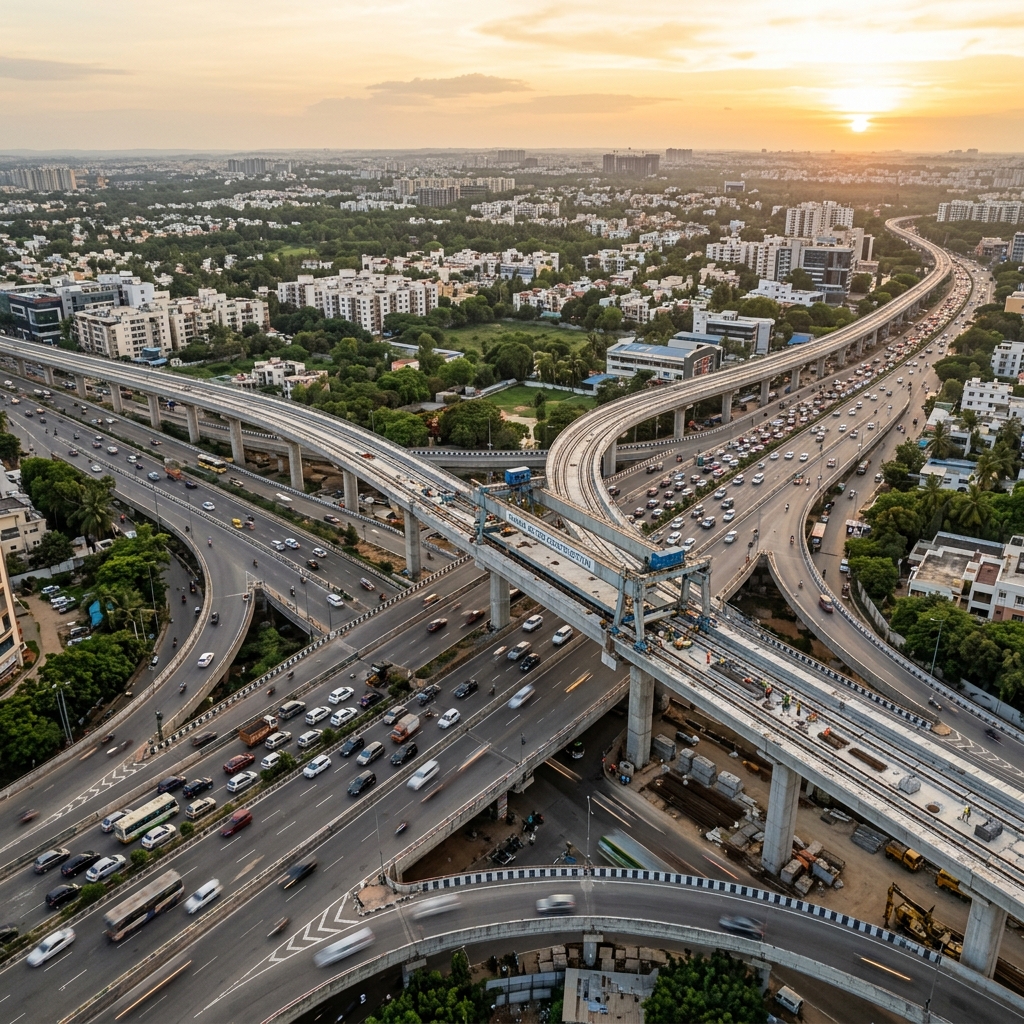
Connectivity is the single most reliable predictor of long-term property appreciation. For investors exploring the Devanahalli real estate corridor, two infrastructure projects — the Namma Metro expansion and the Satellite Town Ring Road (STRR) — are set to fundamentally reshape the area's accessibility and, by extension, its property valuations.
1. Namma Metro: The Blue Line Extension
The Namma Metro network's northward expansion is one of the most consequential infrastructure events for Devanahalli's long-term property market. The relevant alignment for this corridor is the extension towards the airport, which will create a dedicated mass rapid transit link between the city centre and the Kempegowda International Airport.
What History Tells Us About Metro Impact
When the Purple Line opened in Whitefield in 2023, property values along the corridor increased by 22–28% in the 18 months following the operational launch. The Blue Line extension to Devanahalli is expected to produce a similar or larger effect, given the airport's anchor status and the absence of existing rail infrastructure in the corridor.
Current property prices in Devanahalli are already pricing in a portion of this expectation. The strategic window — where prices reflect anticipation but not full realisation — is estimated to remain open for 24–36 more months.
2. The Satellite Town Ring Road (STRR): The Game Changer
The STRR may be less discussed than the metro, but its implications for Devanahalli are arguably more significant. This 280km peripheral orbital road will encircle Bangalore at a radius of 25–35km, connecting every major corridor — Sarjapur, Whitefield, Electronic City, Kanakapura Road — without requiring any journey through central Bangalore.
Why This Changes the Investment Equation
- Sarjapur to Devanahalli in under 45 minutes — currently a 90+ minute journey through the city
- Whitefield to Devanahalli in 30–35 minutes — making it realistic for Whitefield IT workers to live in Devanahalli
- Electronic City to Devanahalli — opens the airport corridor to South Bangalore's largest IT employment base for the first time
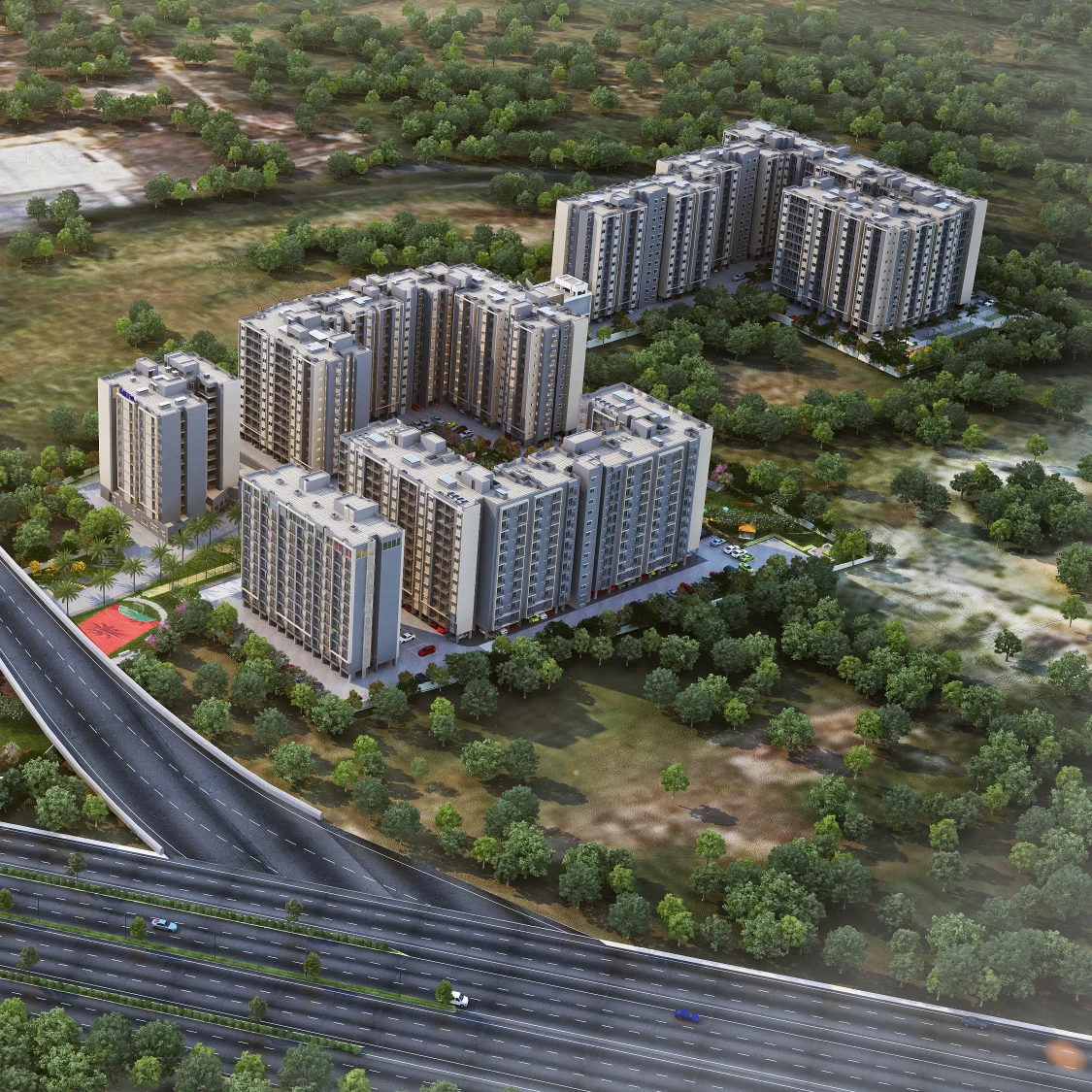
For plotted developments like Assetz Palmscape on IVC Road, the STRR dramatically expands the potential buyer and tenant pool beyond just airport-facing demand, to the entirety of Bangalore's IT workforce.
3. KIADB Aerospace SEZ and IT Investment Region
The planned 12,000-acre Aerospace SEZ adjacent to the airport, combined with the proposed IT Investment Region (ITIR), will create a second employment cluster in North Bangalore rivalling Manyata Tech Park in scale. The aerospace park alone is expected to directly employ 80,000+ people upon completion — creating demand for 40,000–60,000 new residential units within a 15km radius.
4. Existing Connectivity Strengths
Even before these projects materialise, Devanahalli has strong existing connectivity:
- NH-44 (Bellary Road): The 6-lane highway connecting Devanahalli to Hebbal and central Bangalore in 35–45 minutes under normal traffic
- BSRP Suburban Rail: The Devanahalli-City Station suburban rail corridor is under active development and will further reduce commute times
- IVC Road: The Inner Ring Road variant connecting Devanahalli to Hoskote and the Whitefield corridor
The Infrastructure-Price Connection
In Bangalore's property market, infrastructure does not just improve connectivity — it creates a hard price floor. Once a metro station is confirmed, once an STRR bypass is operational, those connectivity benefits are permanent and priced into land values for decades. Investors who buy before full operationalisation consistently capture the largest share of the appreciation cycle.
.webp)