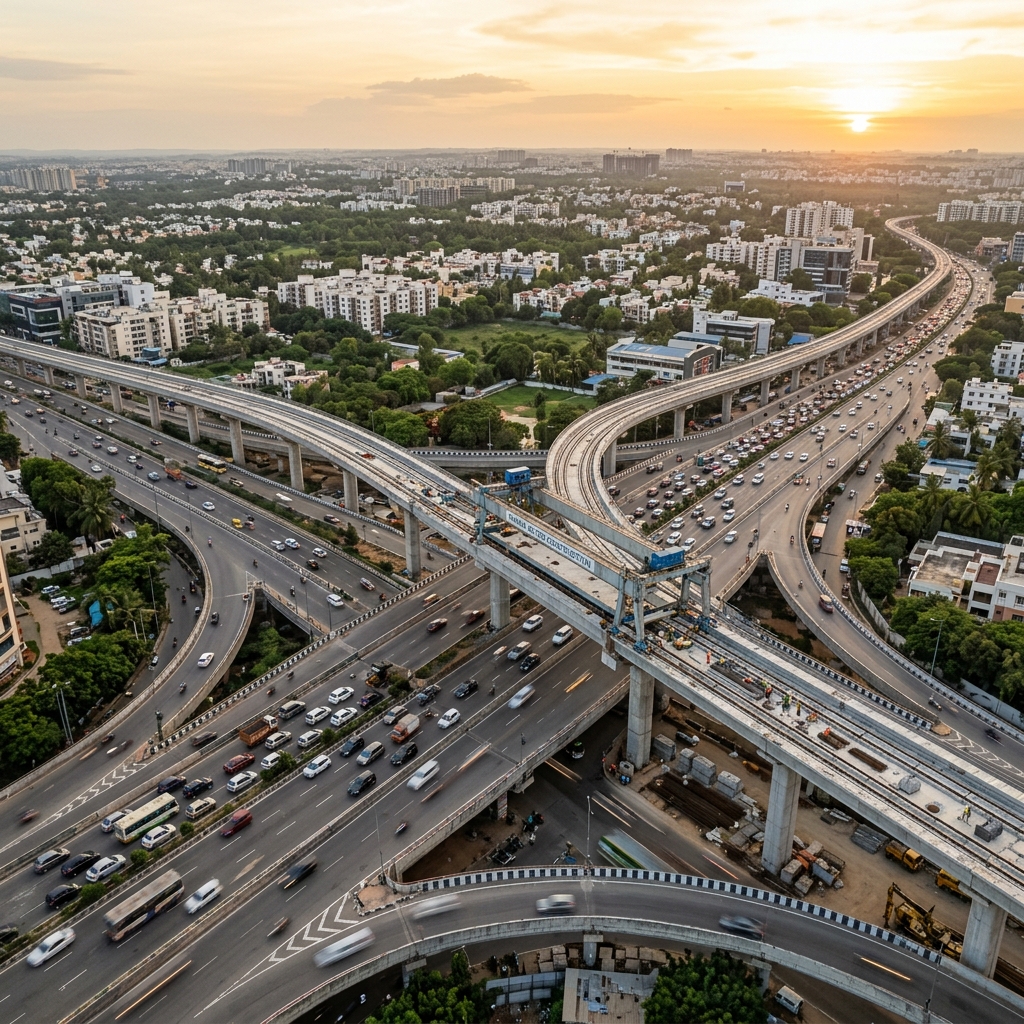
Two pieces of airport-adjacent news landed within days of each other in early November 2026, and together they say something useful about where Bengaluru's airport corridor is headed. On November 3, the Directorate General of Civil Aviation approved mixed-mode runway operations at Kempegowda International Airport, following a proposal submitted by Bangalore International Airport Limited, a change expected to allow more flexible use of the airport's runways and potentially cut delays, fuel consumption and emissions. Three days later, on November 6, the Bangalore Development Authority began construction on a four-lane elevated road on the airport-bound route, with traffic disruption expected for roughly 18 months while the work proceeds. For Devanahalli, the stretch of North Bengaluru that has built its entire investment case around proximity to this airport, one is an operational upgrade and the other is a near-term inconvenience in service of a longer-term one. Both are worth understanding on their own terms.
1. What Mixed-Mode Runway Operations Actually Change
Kempegowda International Airport already handles serious volume: about 43.82 million passengers in calendar year 2025, up from roughly 40.73 million in 2024, with monthly traffic running around 3.3 million passengers as of September 2026. Capacity at that scale is constrained less by terminal space than by how efficiently the airport can sequence arrivals and departures across its runways. Mixed-mode operation, allowing a single runway to handle both landings and takeoffs more flexibly rather than dedicating runways to one function at a time, is the kind of operational change that airports typically pursue specifically because passenger growth is outpacing the headroom available under the existing runway allocation. The DGCA's approval doesn't by itself add flights overnight, but it removes an operational constraint that would otherwise cap how much more traffic the airport can absorb as Bengaluru's air travel demand keeps climbing.
2. Why the Road Work Matters More to Devanahalli, Even Though It's Disruptive
The BDA's four-lane elevated road is a different kind of news, and a less comfortable one in the short term. Eighteen months of construction-related disruption on the primary airport-bound route is a real, near-term cost for anyone commuting through this corridor daily, and buyers evaluating a Devanahalli project right now should factor that disruption into their expectations for the next year and a half, not pretend it away. But the long-term logic is straightforward: an elevated, dedicated road segregates airport-bound traffic from the surrounding ground-level congestion that has increasingly built up as Devanahalli's own residential population has grown around the airport. Once complete, that kind of grade-separated infrastructure tends to produce a more durable commute-time improvement than incremental lane-widening, precisely because it survives future growth in local traffic rather than being eroded by it within a few years.
- Mixed-mode runway approval (Nov 3) is a capacity-side upgrade, removing an operational ceiling on how much more traffic the airport can handle.
- Elevated road construction (started Nov 6) is a near-term disruption with a longer-term connectivity payoff, expected to take about 18 months.
- Both point the same direction: a corridor being built out for materially higher traffic volumes, air and road, over the coming years.
3. What This Means for Devanahalli's Residential Corridor
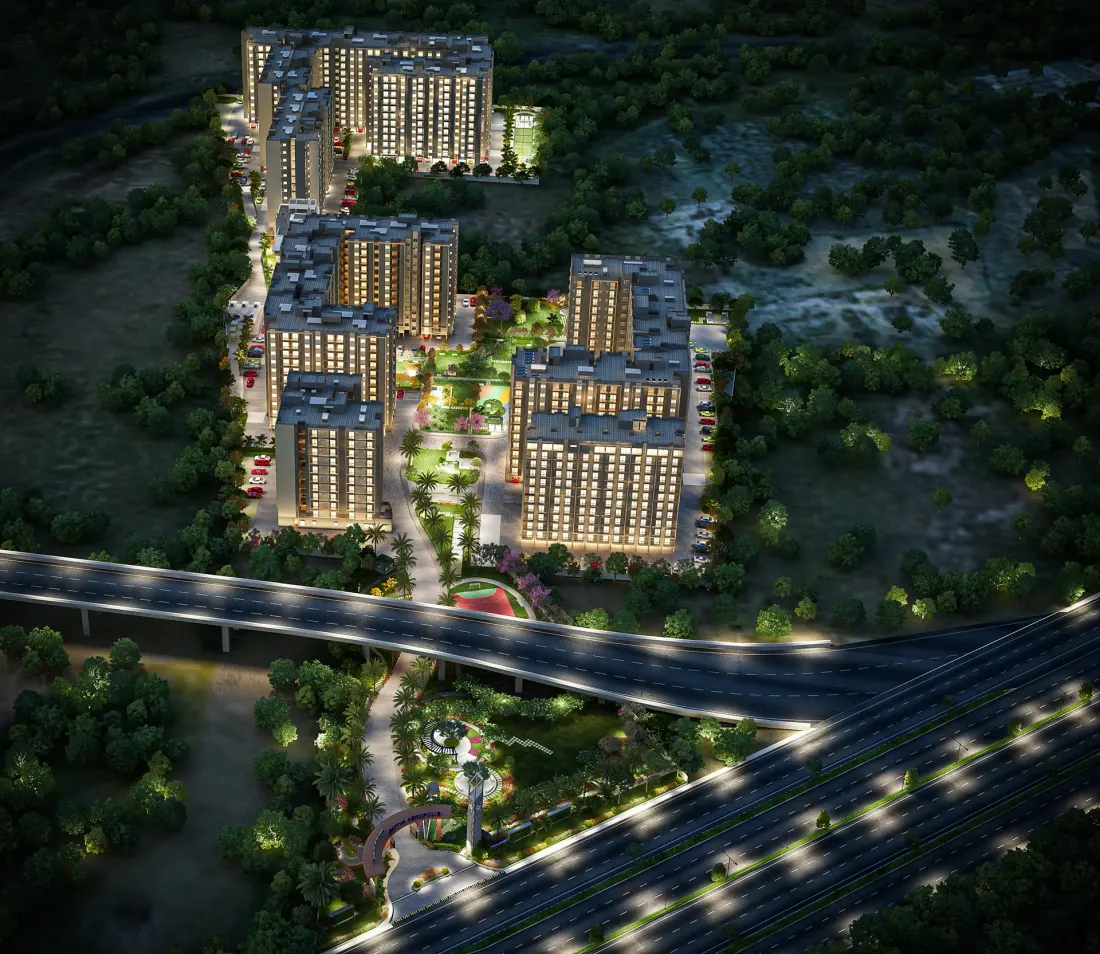
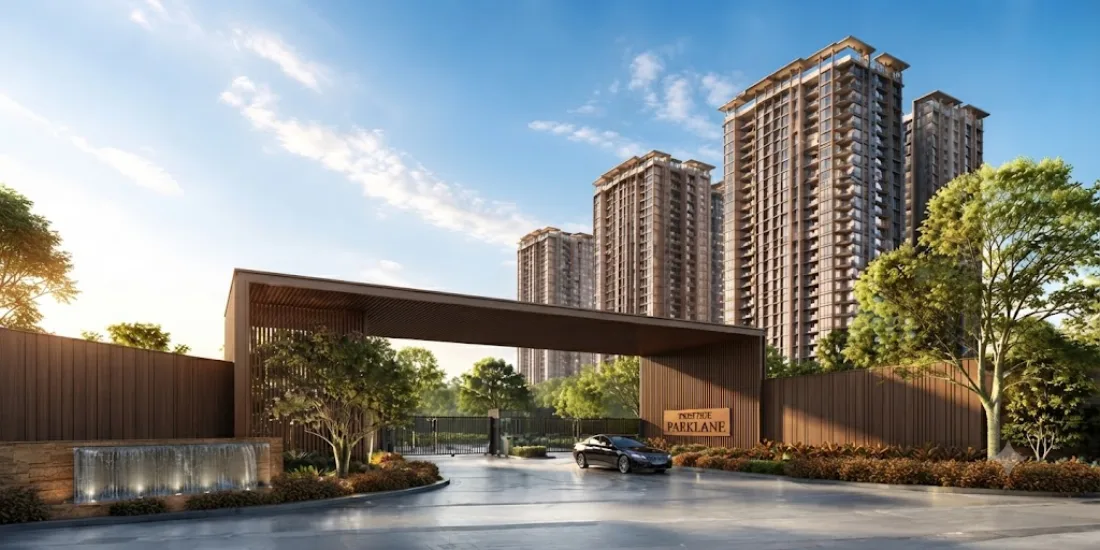
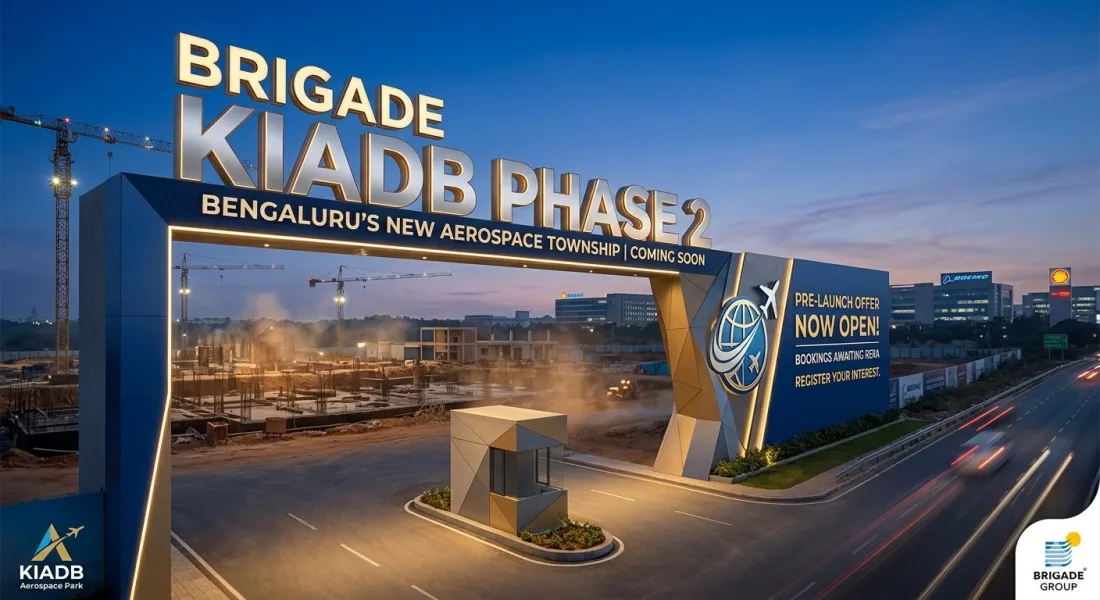
Devanahalli's entire pitch to buyers rests on airport proximity, and these two developments are a reminder that the airport itself is still actively being scaled up rather than treated as a finished asset. Sattva Aeropolis offers Phase 1 homes from Rs 60 lakh and Phase 2 studio and 1 BHK units from Rs 45.77 lakh, positioned squarely to capture this corridor's growth. Prestige Parklane, launched on September 25, 2026 with 1,788 units across 9 towers on 32.26 acres, offers 1 to 3 BHK apartments from around Rs 56 lakh. And Brigade KIADB Phase 2 is a 75.04-acre, EC-verified township planned for 7,195 homes alongside a hospital, hotel and WTC office campus, a scale of development that only makes sense if the surrounding infrastructure, airport capacity and road connectivity included, keeps pace. The runway approval and the road construction are both, in different ways, evidence that it is.
4. What to Factor In Before You Commit
None of this changes any individual project's price, RERA status or possession date, and buyers should treat it as corridor-level context rather than a reason to rush a decision. It is worth planning around the 18-month construction window if you expect to commute through this stretch regularly in the near term, and worth asking any Devanahalli developer directly how their site's access road interacts with the BDA's new elevated route once complete. The mixed-mode runway change is a less visible factor day to day, but it is a genuine signal that the airport's own planners expect sustained passenger growth, which is generally supportive of the long-term case for residential demand in the surrounding micro-markets.
The Bottom Line
A runway operations upgrade and a new elevated access road are not the kind of headlines that move prices overnight, but together they describe an airport and its surrounding road network both being built out for a bigger future than today's traffic levels. For Devanahalli buyers, that is a reasonable, if incremental, point in favour of the corridor's long-term thesis, alongside the near-term reality of construction disruption to plan around. Talk to our team for a closer look at how specific Devanahalli projects sit relative to the airport's expanding road network.